The Colorado River stretches 1,450 miles across the U.S. And for just 17 miles, the river flows through the Fort Mojave Indian Tribe’s reservation, which spans across three states: Arizona, California, and Nevada.
Fort Mojave Indian Tribe Chairman, Timothy Williams, on a humid triple digit day in the valley shows me around the tribe’s checkerboard farmland in Arizona. That’s the state in which the tribe has the most water rights.
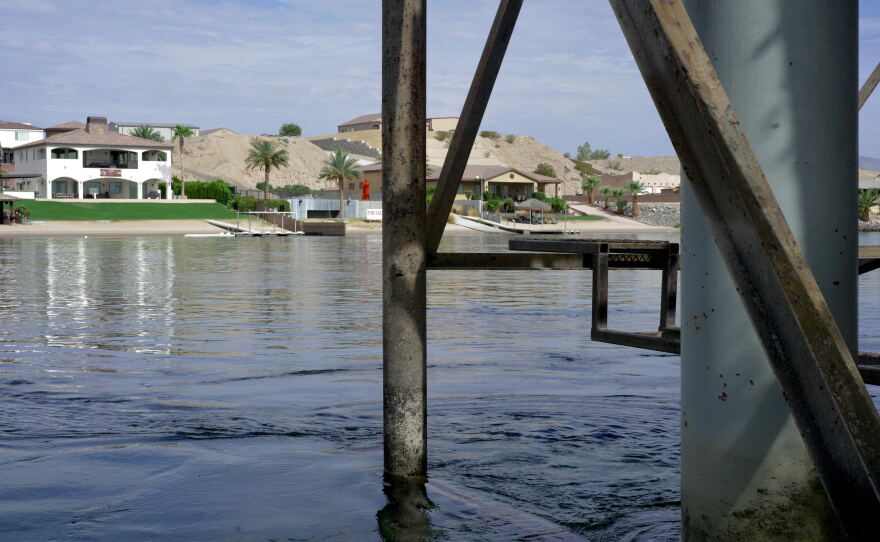
“Look over there, multi-million dollar homes that are right there across the river,” Williams said. “And here's our infrastructure and trying to provide for an entire people.”
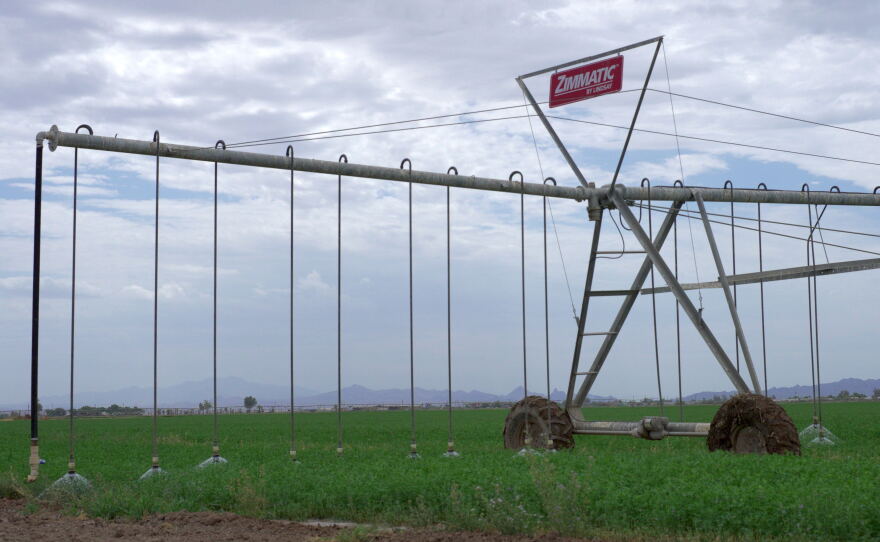
The tribe has 133,000 acre-feet of water a year - enough to sustain over a quarter of a million households. Most of that goes to their alfalfa and upland cotton operation, which pays for healthcare services, housing, a state of the art elementary school, tribal utilities and other services. But as states, cities, and the federal government fight over the future of the river, all of that is at risk. And tribes like the Fort Mojave are often left out of the negotiations.
“There is a long history of not successfully including tribes in basin governance or water management,” said Jay Weiner, a water attorney for Quechan Indian Tribe, co-founder and member of the Water and Tribes Initiative leadership team. An organization that supports sustainable water use and tribes along the river. “And so there is a significant tension there and difficulty presented by not bringing tribes to the table.”
22 tribes out of 30 have established rights to the river, while others have unresolved claims. But what they all have in common is that the river provides for their people, both economically and culturally.
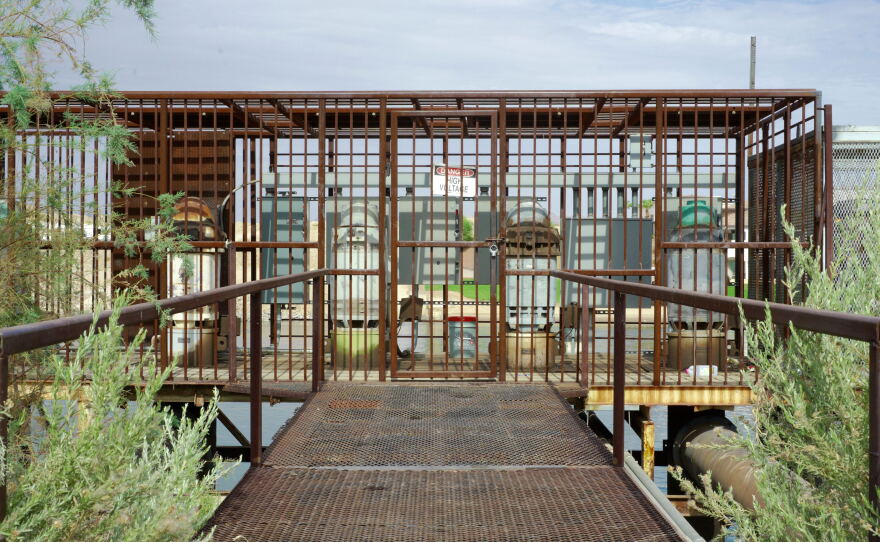
Back on the Fort Mojave reservation, Williams parks his truck on the dirt road to visit the pump that takes water to large central pivot irrigators.
Standing by the river, he points to the dropping riverbank. When the water goes below the rock line, it is too low to be pumped.
“So depending upon the decisions that are made, wherever they are, they heavily impact us and it only comes down to a couple of feet where we can be impacted completely,” he said.
The chairman squats down to touch the water.
“You can see how close it is already,” he said. “It's that close, only a couple of feet determines whether or not we're able to provide for our people. It's that close right now. ”

Last winter the water levels were so low that the tribe's pump was unable to pull water for their crops for four months. It’s the first time that’s ever happened.
“If we keep encountering these same conditions with our current pumping stations, it's gonna really, really limit what we can grow here,” said Andrew Harter, the farm manager for the Tribe. “So that's gonna be one of our biggest obstacles on the farming side, which we've never had to.”
The Secretary for the Fort Mojave Indian Tribal Council, Colleen Neolge Garcia, says the tribe’s connection to the river is much deeper than its financial benefit.
“When Creator created the people, he placed the Mojave people in this area, and our traditional name is called Aha Macav, and that's people who live along the river,” she said. “And he designated us as the caretakers of the river, the Colorado River.”
Fort Mojave elders can remember how the river once was.
“We've seen the changes that have come and we've seen the river being dammed up. We've seen it getting smaller and smaller and every year, you know, it gets smaller and it just hurts our people,” she said.
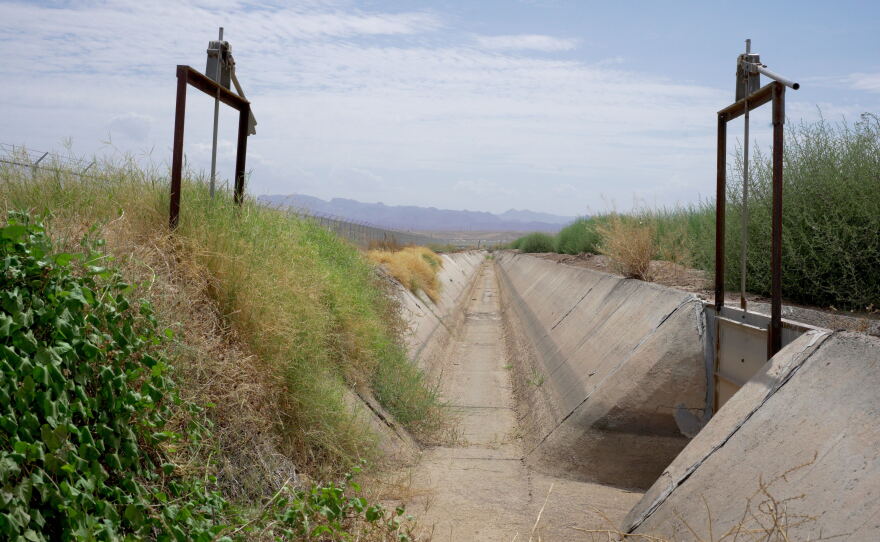
Tribes along the river have water rights, but if they aren’t able to pull that water, the tribe is left with paper rights only. With a lack of infrastructure they often have to find creative uses. The Las Vegas Paiute Tribe, for example, uses its allocation to supply three golf courses, housing, and a cannabis growing operation on its land.
In Utah, the Shivwits Band of Paiutes have proposed a 1,250-acre resort with an 18-hole golf course.
The Bureau of Reclamation recently released a 10-year plan that cuts water from the three lower basin states: Nevada, California, and Arizona. The four upper basin states – Colorado, Utah, Wyoming and New Mexico – did not receive cuts.
Weiner says the proposal was underwhelming.
“What we're looking at right now is a bandaid,” he said. ”I think there had been hope that what we would have is a durable 20 year framework.”
Nevada has a 1.8% allotment of the river, the smallest allotment for a state along the river. In the new conservation plan, it received a 17% cut. The state responded with a lawsuit arguing that the cuts could risk Nevadans safety and harm the state economically.
Nevada’s lawsuit, Weiner says, is a worrying sign that states may not be able to agree on any conservation measures.
And the lawsuit may impact a pending legal battle the Navajo Nation is litigating for the water rights they believe they deserve. Dwight Witherspoon, the water rights attorney for the tribe, said in a statement that Nevada’s lawsuit may be a “monkey wrench” in their Arizona water rights settlement through Congress. Before Nevada’s lawsuit, the water rights settlement was stalled due to resistance from the Upper Basin states.
If the Navajo Nation was to gain more water rights, the tribe could have access to millions in federal funds.
Meanwhile, Chairman Williams and the Mojave people are looking at an uncertain future.
“These are the things that keep us up at night,” Williams said, “But we are a strong and resilient people, Fort Mojave, and we will continue on no matter what takes place, you know, no matter what decisions take place out there, we will continue on and we will continue on as a people out there.”